“F*ck AI” Is Not an Informed Position
Written by: Jules Flesner
Someone in my LinkedIn feed today called people making AI music “cheap b@stards” who "need to go away." Versions of this echo across the internet every day.
But have you considered who's being told to leave?
It's not just the spammers.
I produce original music with the help of AI tools alongside traditional music software. I trained in piano for more than a decade. I love playing acoustic guitar, even if I can only kinda awkwardly strum ~10 total chords.
I have a singing voice, but a sensory processing disorder makes speech while singing difficult, even with lyrics in front of me. (Did you know that speech is one of the most complex motor activities humans perform?)
Add to this an injury that left me with nerve damage in parts of my face. I can no longer feel all of the vibrations that singers rely on as cues for vocal placement and breath control.
So I don’t aspire to perform live, and a traditional studio isn’t in my budget. But I still have original songs to share, all inspired by lived experience, with a few highlighting powerful stories from the history of southern Illinois’ coal country, where I’m proudly from.
AI software gives artists like me a way to publish our human-authored and human-directed work.
Lumping all AI music into the same "f*ck off, go away" tantrum makes that distinction, and valuable conversations around equality and accessibility, disappear.
In 2025, women held only 4% of producer credits on Billboard’s year-end Hot 100. (That’s down from 6% the year before… ugh.) We are nowhere near equality.
Before jumping on the “ban it all” bandwagon, consider how AI-assisted production could help more women produce and release music, including someone like me who now has credits on ~20 original songs.
Consider accessibility, too. Someone who cannot speak may have musical ideas they’ve never had a way to share. Tools that accept typed instructions or musical input can help them create and publish in an industry where they previously had no way to participate. That deserves more dialogue than just calling these individuals “cheap b@stards.”
OF COURSE there are serious concerns with AI tools and music distribution platforms.
Everyone has a right to demand artist protections or challenge a company’s practices. Those are positions with substance.
When publishing my songs this year, I refused to participate in a distributor’s pilot program that required listing their AI as a main or featured artist with a fixed 50% revenue share. That wasn’t accurate or fair. I wrote the songs, created an AI clone using my own singing voice, and produced the music with paid software tools licensed for commercial use. I see those tools as part of my production process, not as featured artists. Can you imagine Rihanna releasing “Umbrella” featuring GarageBand? Lady Gaga “Just Dance” featuring Logic Pro?
Software supporting, not replacing, human authorship seems like something most of us can agree on.
I’ve done my best to promote transparency with custom labels and a standalone artist FAQs website, but I still get lumped into every “f*ck AI music” rant online.
AI has been embedded in our everyday tools and apps for over a decade. Throwing a tantrum online doesn’t make it disappear.
It also tells us nothing about what you actually understand or how you’re addressing the people and platforms you’ve seen using it irresponsibly.
Music industry pros can spot AI-generated music a mile away, just like I can with graphics. I screenshot examples to teach interns about design and communications principles, and to use in training others how to recognize and report scams, spam, and systemic bias.
I also take notes when I spot impressive work that will save my clients time or money.
There’s always something more useful to do than announce that everything is garbage.
My 80+ year-old dad emailed me after hearing my production of “Memories,” a song he wrote nearly twenty years ago.
“That’s a hit. I can't believe I wrote it, and I can't believe I forgot I wrote it!!!”
He then called to explain what had inspired the lyrics: a woman in his local music scene had lost her partner and faced the daunting task of sorting through the household belongings of a life they’d shared.
I loved learning this context. I especially loved getting a follow-up call from my dad. He had looked this woman up to call and tell her about the song on my album, an emotional and thrilling surprise for her.
What meant even more was that my dad could hear his songs at all. His hearing is declining. Bringing his 40-year poetry and songwriting catalog to life feels like a race against time, and AI tools are creating a chance for him to hear his original work while his hearing aids still make that possible.
With so many people adamantly against “all AI music,” publishing songs that rely on these tools leaves me feeling vulnerable and alienated.
That one email from my dad is reason enough to keep creating and advocating for responsible commercial AI use that helps more people overcome barriers to producing and sharing their original music.
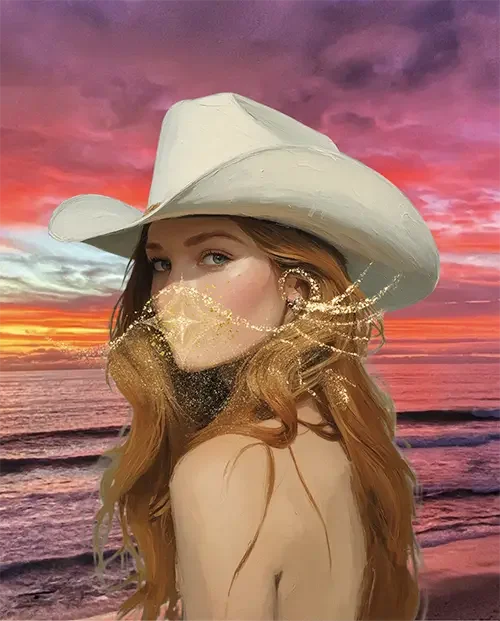
Vermillion + Co. is an independent music project blending coal-country folk roots with modern AI studio technology to produce original music under the exclusive creative direction of Jules Flesner. Thank you for supporting women in STEM!